 +31(0)884321800
 en
en
 nl
nl


For international organizations, this creates an important question: in which countries do you need to act now, and where should you start preparing?
The European Waste Framework Directive (WFD) requires all EU Member States to establish Extended Producer Responsibility (EPR) schemes for textile, textile-related and footwear products by 17 April 2028. However, 2028 is the EU-wide implementation deadline, not the starting date for Textile EPR compliance across Europe. Several countries already have national requirements in place.
One European framework, different national requirements
The WFD establishes the European framework for Textile EPR. It sets requirements for areas such as product scope, producer responsibility, registration, Producer Responsibility Organizations (PROs), collection and reporting. Products covered by the European framework are identified through CN codes in Annex IVc.
Member States implement these requirements through national legislation. This means that organizations operating across Europe should not expect one identical compliance process across all 27 EU Member States.
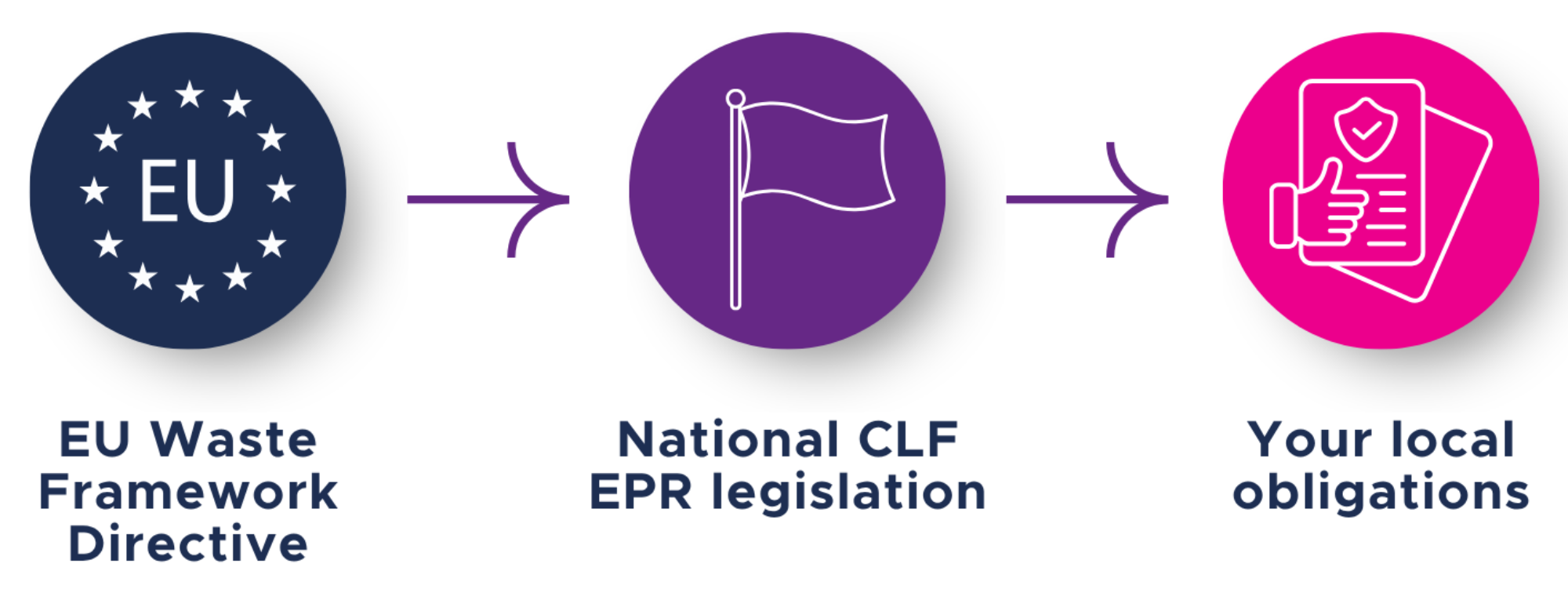
One EU framework ≠ one EU registration
National Textile EPR requirements can differ in areas such as:
- products in scope
- producer definitions and responsibilities
- registration requirements
- reporting requirements and frequency
- data requirements
- applicable fees
- available or mandatory PROs.
For example, one country may require an annual declaration based on product classifications, while another may require more detailed or frequent reporting.
For international organizations, these differences can quickly become complex. You need to understand not only whether your organization is considered a producer, but also where you have obligations and what each country requires.
Not sure whether your organization qualifies as the producer? In Part 2 of our Textile EPR series: Textile EPR producer: when are you considered a producer? we explain how your products, legal entities and position in the supply chain affect your producer status.
Textile EPR Europe: where do requirements apply?
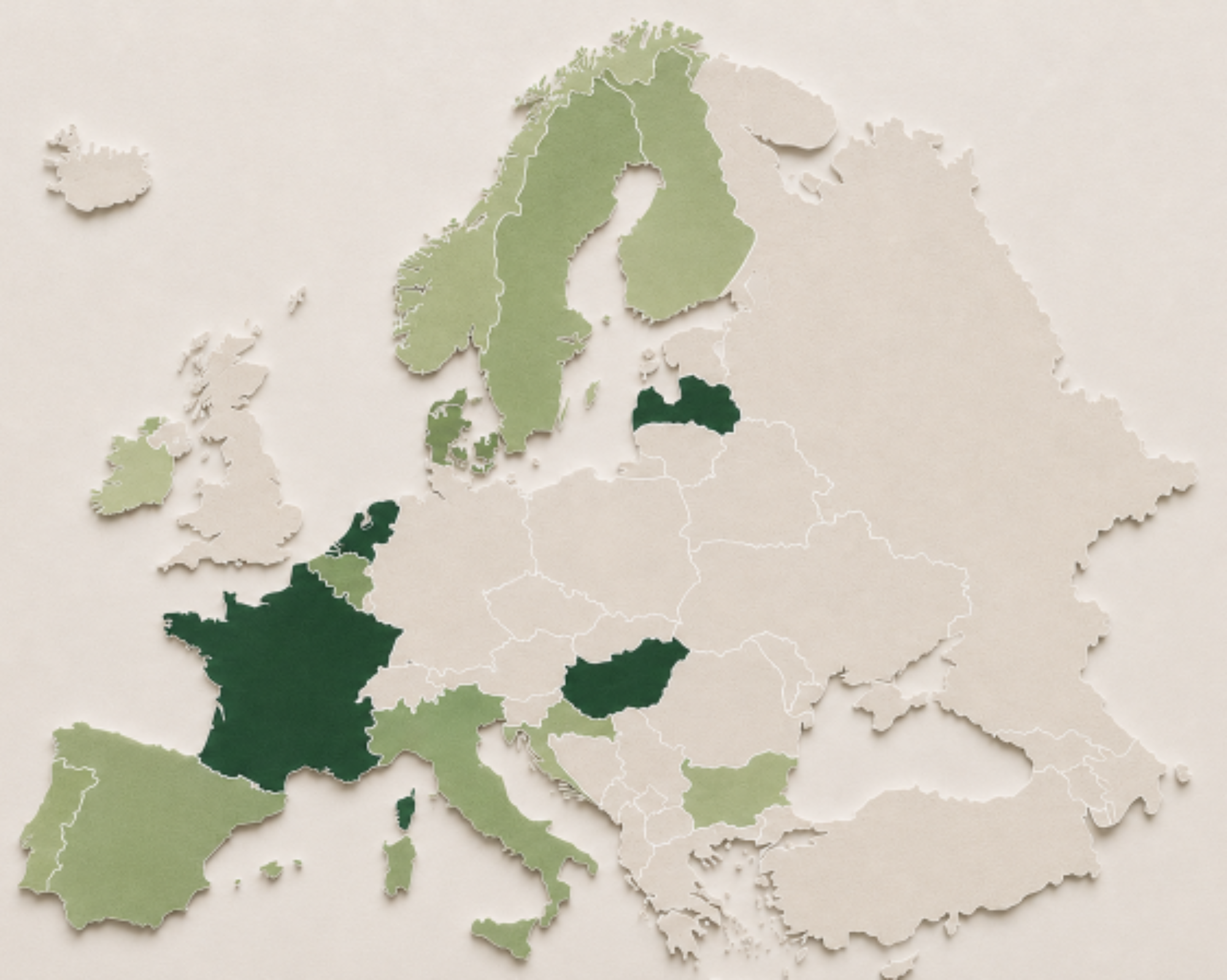
The development of national CLF EPR regulations is progressing at different speeds across Europe. At the time of publication, countries can broadly be divided into several stages of implementation:
Status | Countries |
|---|---|
4 active Textile EPR registrations | France, Hungary, Latvia and the Netherlands |
3 final drafts | Denmark, Italy and Spain |
4 expected drafts | Belgium, Bulgaria, Finland and Sweden |
4 indications | Austria, Croatia, Ireland and Portugal |
12 countries to act1 |
|
1 Status at the time of publication: July 2026.
What do these statuses mean for your organization?
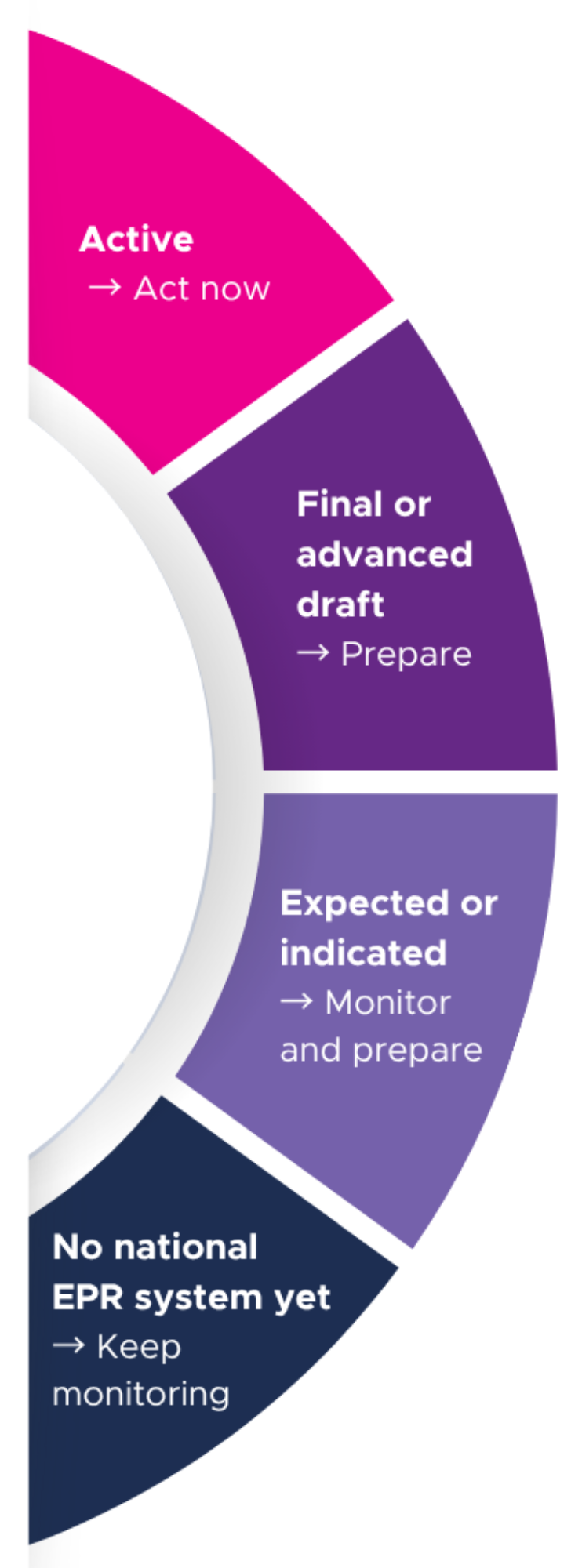
The status of a country helps determine how urgently you need to act:
Active → Act now
Assess whether your organization is the producer and determine your current registration, PRO and reporting obligations.
Final or advanced draft → Prepare
Assess your likely scope, producer position and data requirements so implementation can start once the final requirements apply.
Expected or indicated → Monitor and prepare
Follow legislative developments and make sure your internal EPR processes and data can accommodate new country requirements.
No national textile EPR system yet → Keep monitoring
Do not assume that no action will be required. All EU Member States must establish Textile EPR schemes in line with the European framework by 17 April 2028.
Importantly, an active Textile EPR system in a country does not automatically mean your organization is obligated there. Your producer status still needs to be assessed against the applicable products, legal entity and national requirements.
4 active textile EPR regulations: 4 different implementations
France, Hungary, Latvia and the Netherlands demonstrate why Textile EPR compliance cannot simply be copied from one European market to another.
Although their Textile EPR systems are based on the same broader European principles, their national requirements differ as a result of the country’s specific needs.
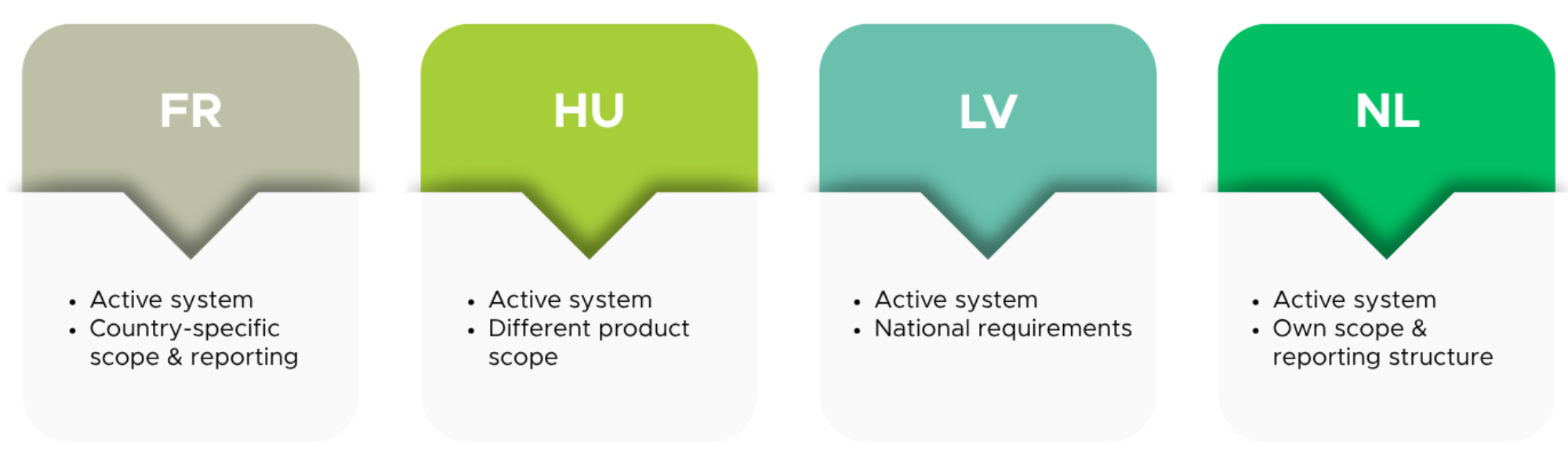
Looking at the product scope alone, there are similarities in the bulk of the scope, but the main differences can be found in the accessories. Hungary, for example, includes leather & fur products within its national scope, while certain other textile products like hats, scarves or footwear are treated differently.
And product scope is only one part of the assessment. Depending on the country, organizations may encounter differences in: Product scope, producer status, registration, PRO, data, reporting and fees.
This means a registration or reporting setup that works for one country cannot automatically be applied to another.
For international organizations, the practical question is therefore not simply:
“Do we have Textile EPR obligations?”
It is:
“In which countries are we obligated, for which products and entities, and what do we need to do there?”
Why you should not wait until 2028
The April 2028 deadline can create the impression that organizations still have plenty of time to prepare. The current European Textile EPR landscape shows why that can be misleading.
National systems already exist, while other Member States are moving through different stages of legislation and implementation. At the same time, organizations need time to determine producer status, identify products in scope, gather product and sales data, complete registrations and set up recurring reporting processes.
2028 is the EU-wide implementation deadline, not the date to start preparing for Textile EPR.
The earlier you understand which markets affect your organization, the more time you have to address gaps before they become compliance issues.
In Part 1 of our Textile EPR series: Textile EPR implementation: 3 common pitfalls organizations should avoid, we explain why waiting for legislation or reporting deadlines is one of the most common implementation pitfalls.
What can your organization do today?
Map markets → Check country status → Assess producer status → Obligations → Prioritize → Monitor
For organizations selling CLF products across multiple European markets, the first step is to create a clear overview of where action is required. It is also important to build a compliance foundation: have a dedicated team, a capable EPR system and the expertise.
A practical approach to building your compliance roadmap is:
- Map your markets: identify the countries in which your organization places CLF products on the market.
- Check the national Textile EPR status: determine which countries already have active requirements and which are still developing legislation.
- Assess your producer status: determine the responsible legal entity and your role in the supply chain for each relevant market.
- Identify your obligations: establish which registrations, PRO requirements, reporting obligations, fees and other requirements apply.
- Prioritize: separate countries where you need to act now from countries where you need to prepare or monitor developments.
- Keep monitoring: update your country assessment as legislation and your own business flows change.
Determining the obligations per country will allow you to take the needed steps towards compliance and prevent risks of non-compliance, such as enforcement measures (penalties/fines) and potential disruptions to your market activities (like sales bans).
With limited internal resources, you may take the strategic business approach to engage with already established EPR specialists that can assist you with the legal guidance and clear mapping of your obligations. This will result in a more centralized reporting system, with an external project manager who will guide you through.
How we support your Textile EPR compliance across Europe
Keeping track of different Textile EPR regulations, deadlines and reporting requirements across multiple countries can require significant internal resources. You do not have to manage that country-by-country complexity yourself.
Pincvision helps you determine where your organization has CLF EPR obligations and what is required in each country. We assess your obligations, support your environmental registrations, help collect, structure and enrich the required product and sales data, and manage recurring EPR reporting on your behalf.
As national legislation changes, we monitor the requirements and adjust the compliance process where needed.
This gives you one centralized approach to Textile EPR compliance across Europe, without having to maintain all country-specific regulatory knowledge and reporting processes internally.
Selling Clothing, Linen & Footwear across multiple European markets and unsure where you need to act?
We can help you map your Textile EPR obligations by country, determine what needs to be arranged and support the registrations and reporting that follow.
 5 min
5 min
Roos Mijnen
Environmental Compliance Specialist


