+31(0)884321800
 en
en
 nl
nl


The most important question to answer is: when are you considered to be the producer for the CLF Extended Producer Responsibility (EPR) reporting?
The answer determines whether your organization may be responsible for Textile EPR registration, reporting and financing the collection and treatment of textile waste. And for international organizations, that answer may differ from one country or business flow to another.
Are you a Textile EPR producer?
🏭 Manufacturer≠ automatically the producer
📦 Importer, distributor or distance seller= may qualify as the producer
What matters? Your products, legal entity and the Member State in which the products are first made available.
CLF implementation enforced by 2028
Textile, or better said Clothing, Linen & Footwear (CLF), is one of the latest developments within Extended Producer Responsibility, based on the European Waste Framework Directive.
This does not only mean significant developments on legislation and implementation. It also results in a higher priority within your organization and increases the need for clarity.
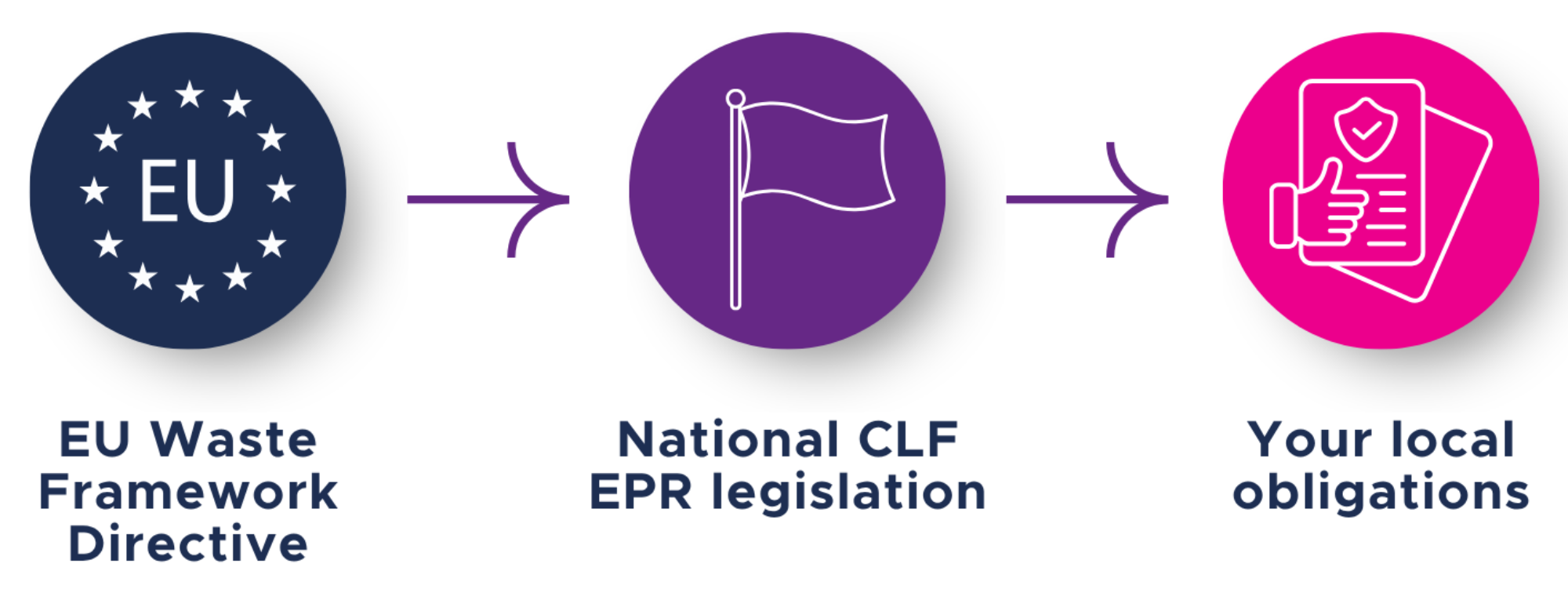
EU-wide implemented by April 2028. Some countries already have Textile EPR systems in place.
What is Extended Producer Responsibility?
EPR is a system in which producers are responsible for financing and supporting the management of products when they reach end-of-life and become waste. The aim is to move towards a circular economy by increasing collection, sorting, reuse and recycling and making better use of the resources already available instead of importing or generating new materials.
For textiles, these activities are supported through 'Producer Responsibility Organizations' (PROs), formerly often referred to as compliance schemes. A PRO organizes or facilitates certain EPR activities on behalf of producers. Textile producers finance the system through fees, which contribute to activities such as the collection, sorting, reuse and recycling of textile waste.
In practice, EPR compliance therefore goes beyond knowing whether legislation applies to you. If you are the obligated producer, you need to understand where you need to register, what you need to report and which fees and other requirements apply.
What does this mean for you?
The EU implementation deadline may be in 2028, but preparing for Textile EPR starts much earlier. Determining your scope, gathering the required data and assigning internal responsibilities all take time.
We discuss these implementation challenges in Part 1 of this Textile EPR series: Textile EPR implementation: 3 common pitfalls organizations should avoid.
Which products need to be reported?
The potential CLF scope set out in the Waste Framework Directive is based on certain commodity codes, related to textile or textile-like items and footwear.
The commodity codes in scope are CN codes starting with 61 or 62: these codes cover many common use textile items like most clothing, whether knitted or non-knitted. However, the scope extends beyond these chapters and includes additional CN codes covering products such as clothing accessories, household linen and footwear.
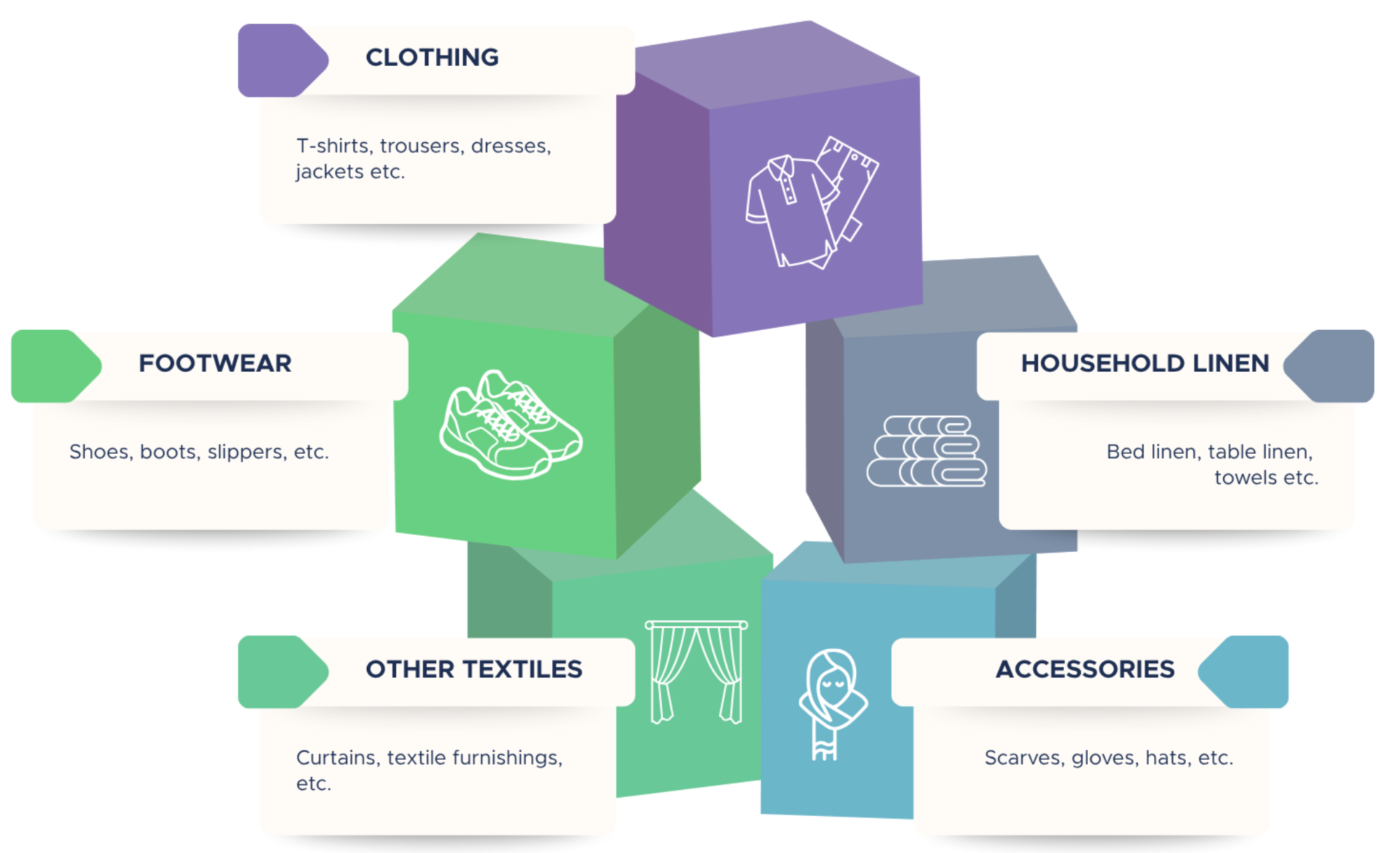
Product scope is determined by applicable CN codes and national requirements, last updated August 2026.
Who is a Textile EPR producer?
The textile EPR producer definition is in line with WEEE, Battery and Packaging EPR compliance.
In practice, this means the first seller on a national market is obliged to perform Textile EPR registrations and reporting.
There are several scenarios where your organization can be considered the first seller/producer:
- Manufacturer: you place CLF products on your domestic market for the first time.
- Importer: you import CLF products from outside the EU and placed them on an EU market for the first time.
- Distributor: you are the first party to make textile or textile like products available on a national market.
- Distance seller: you sell in-scope products directly to end users in another Member State (including distance sales such as e-commerce.)
For international organizations, this assessment is important
Your role in the supply chain is not necessarily determined once at group level. It can differ by country, jurisdiction and legal entity within your organization.
Producers will be required to register in each Member State where products are made available on the market for the first time. When your organization or entity is seen as a producer, the most common next step is registration and reporting in the concerned Member States.
What if you are not the producer?
Not qualifying as the obligated producer does not necessarily mean Textile EPR is irrelevant to your organization.
As a supplier of CLF in-scope items to another party in the supply chain, you will have an obligation to provide information to your customers. Your customers may need reporting data, such as weights and fabric compositions for their compliance reporting. It is therefore important to distinguish between being the legally obligated producer and having a role in the wider compliance process.
This is another reason why scope, product data and internal ownership should be addressed early. In Part 1 of our series: Textile EPR implementation: 3 common pitfalls organizations should avoid, we explain why these foundations should be addressed well before the first reporting deadline.
Differences per Member State
The EU Textile EPR framework operates under a 'harmonized European Directive'; a legal order or official guideline which indicates the legal framework.
It provides an outline for requirements, operational timelines, and protocols that every EU member state should abide by, but Member States implement the requirements through national legislation.
As a result, organizations should not assume that one registration or one reporting process will cover the whole European Union.
National implementation can differ per Member State, on several levels, such as:
CLF items in scope
registration requirements
reporting requirements and frequencies
applicable fees
even the PRO can differ.
These differences increase the need for producer assessment, as each legislation will result in unique obligations.
For organizations operating in multiple European markets, the relevant question is: "In which countries are we the producer, and what do we need to do there?”
Which countries already have Textile EPR requirements and where legislation is still in development?
You can read this in part 3 of our Textile EPR series: Textile EPR Europe: Which countries have implemented Textile EPR?
What can you do now?
Determine → Register → Report → Pay → Maintain
CLF EPR requirements differ across Europe and continue to develop. Keeping track of legislation, understanding which obligations apply to your organization and implementing the necessary changes requires knowledge, internal resources and a structured process. Managing Textile EPR compliance can quickly become complex, particularly for organizations with multiple products, entities and sales channels.
The process becomes easier to manage when you break it down into five questions:
Am I considered to be the producer?
Start with your position in the supply chain. Look at your product portfolio, the legal entity involved, and where your clothing reaches the market and where it is made available for the first time. Do not perform this assessment only at group level. Your producer position may differ by product, market and entity.
Where do I have compliance obligations?
Once you understand your producer position, look at the applicable local legislation.
Determine which of your products are in scope, and which local requirements apply. Where are you obligated to register? Are there any new labeling requirements in country X?
What do I need to do in order to meet my compliance obligations?
‘You register, you report, you pay’. Easier said than done. Each step requires preparation: you need to find the most suitable PRO that meets your company’s needs (lowest reporting fees, more or less assistance, maybe an Authorized Representative service).
Do I have the data and processes to do it?
Registration is only the beginning. Recurring reporting requires reliable product and sales data. You need to know where that data is stored, whether it contains the level of detail required and who is responsible for collecting and validating it. For international organizations, a centralized process helps prevent every country or entity from developing its own reporting method.
What do I need to do to remain compliant?
Textile EPR is not a one-time exercise. Legislation develops, reporting periods return and your own products, sales flows and legal entities can change. Remaining compliant therefore means continuing to monitor national developments and assessing what those changes mean for your registrations, data and reporting processes.
The questions may sound straightforward, but complexity increases quickly with the number of products, countries, and entities within your organization.
The important thing is to know what applies, what needs to happen next and who is responsible for it.
How Pincvision supports your Textile EPR compliance
We take the complexity out of Textile EPR compliance for you.
We determine where your organization has CLF EPR obligations and what is required in each country. We help collect, structure and enrich the required product and sales data in our automated reporting system and manage the registrations and recurring reports on your behalf. As legislation changes, we monitor the requirements and adjust the compliance process where needed.
This gives you one centralized approach to CLF EPR compliance across Europe, without having to build and maintain all the regulatory knowledge, reporting processes and country-specific requirements internally.
Unsure whether your organization is considered a Textile EPR producer, or what you need to arrange in each country?
Get in touch. We'll help you determine where your obligations lie and what you need to do to remain compliant.
 5 min
5 min
Roos Mijnen
Environmental Compliance Specialist