+31(0)884321800
 en
en
 nl
nl


Textile EPR implementation starts at the very base of your organization: your products.
Clothing, Linen & Footwear (CLF) describes the product scope, while EPR is the regulatory framework that places responsibility for those products on producers. Products within the CLF scope can include items that are sold, leased, distributed or gifted.
Does this mean your organization automatically carries the EPR obligation?
> No. But if you are part of the supply chain, you may have a role to play.
Identifying your role in the CLF supply chain is key
Your specific EPR obligations depend on your role in the supply chain and can differ between countries and business flows. Depending on that role, your organization or brand may bear legal obligations for textile EPR compliance. These can range from full EPR reporting obligations to more limited information requirements.
The first question is therefore simple: what is your position in the supply chain, and which EPR obligations follow from that role?
Determining whether your organization qualifies as a producer is an important part of that assessment. We explore this in more detail in Part 2 of this series: Textile EPR producer: When are you considered a producer?
Internal alignment of your EPR obligations
Knowing that your organization is affected is only the beginning. You also need to translate legal requirements into products, data, processes and responsibilities within your organization.
A few questions worth asking internally:
- Scope: Which products, legal entities, markets and business flows fall within your EPR obligations?
- Data: Do you have your product data (product materials and weights) and sales data readily available?
- Ownership: Who is responsible for gathering and validating this information and ultimately submitting the reports?
- Monitoring: How do you keep track of national requirements and legal developments that may affect your obligations?
The answers are rarely found within one department. Product information may sit with Procurement or Product Management, sales volumes with Finance, technical data in an ERP system, and regulatory knowledge with Legal or Compliance.
This is where textile EPR implementation often becomes challenging. Below, we discuss three of the most common pitfalls organizations encounter.

Pitfall 1: underestimating time and knowledge
One of the most common implementation challenges is starting too late. Organizations may wait for final legislation or a reporting deadline before taking action, while much of the preparation can and should take place earlier.
The time required for Textile EPR implementation is easily underestimated. Interpreting regulatory requirements, determining your scope, obtaining information from suppliers, making system changes and aligning internal stakeholders all take time. Building the necessary internal knowledge and making decisions about responsibilities and processes add to that timeline.
When these activities all need to happen close to a deadline, pressure quickly builds and the risk of incorrect or incomplete implementation increases.
There is no single implementation timeline, as requirements and deadlines differ by country. However, you can start assessing your scope, data availability and internal ownership well before registration or reporting deadlines are approaching.
PRACTICAL LESSON 1
Do not wait for the first reporting deadline to start preparing.
Even while national requirements continue to develop, you can already map your supply chain, assess your data and establish internal ownership.
Pitfall 2: your data is not in order
Data is one of the most important foundations of textile EPR compliance and often one of the most underestimated implementation challenges.
Depending on national reporting requirements, you may need data such as product weights, quantities placed on the market, material composition and even the gender associated with the textile if applicable.
The difficulty is not always that the data does not exist. It may be stored across different systems, maintained by different teams, received from suppliers in inconsistent formats or simply not captured at the level of detail required for EPR reporting.
For example, knowing how many units of a product were sold does not necessarily mean you know the total reportable weight or material composition of those products. Gathering, validating and structuring this information can therefore become a labor-intensive process involving Procurement, Product Management, IT, Finance and Compliance.
PRACTICAL LESSON 2
Perform a data-gap assessment early.
Identify which data you already have, where it's stored, who owns it and what's still missing before reporting requirements become operational.
Pitfall 3: a fragmented, decentralized approach
Textile EPR requirements are developing at national level, which can easily lead organizations to approach compliance country by country. Without central oversight, this creates fragmented processes, duplicated work and inconsistent data.
The challenge is therefore to combine central governance with country-specific compliance. Which countries have already implemented Textile EPR, and where is new legislation expected? We explore the current European landscape in Part 3 of this series: Textile EPR Europe: Which Countries Have Implemented Textile EPR?
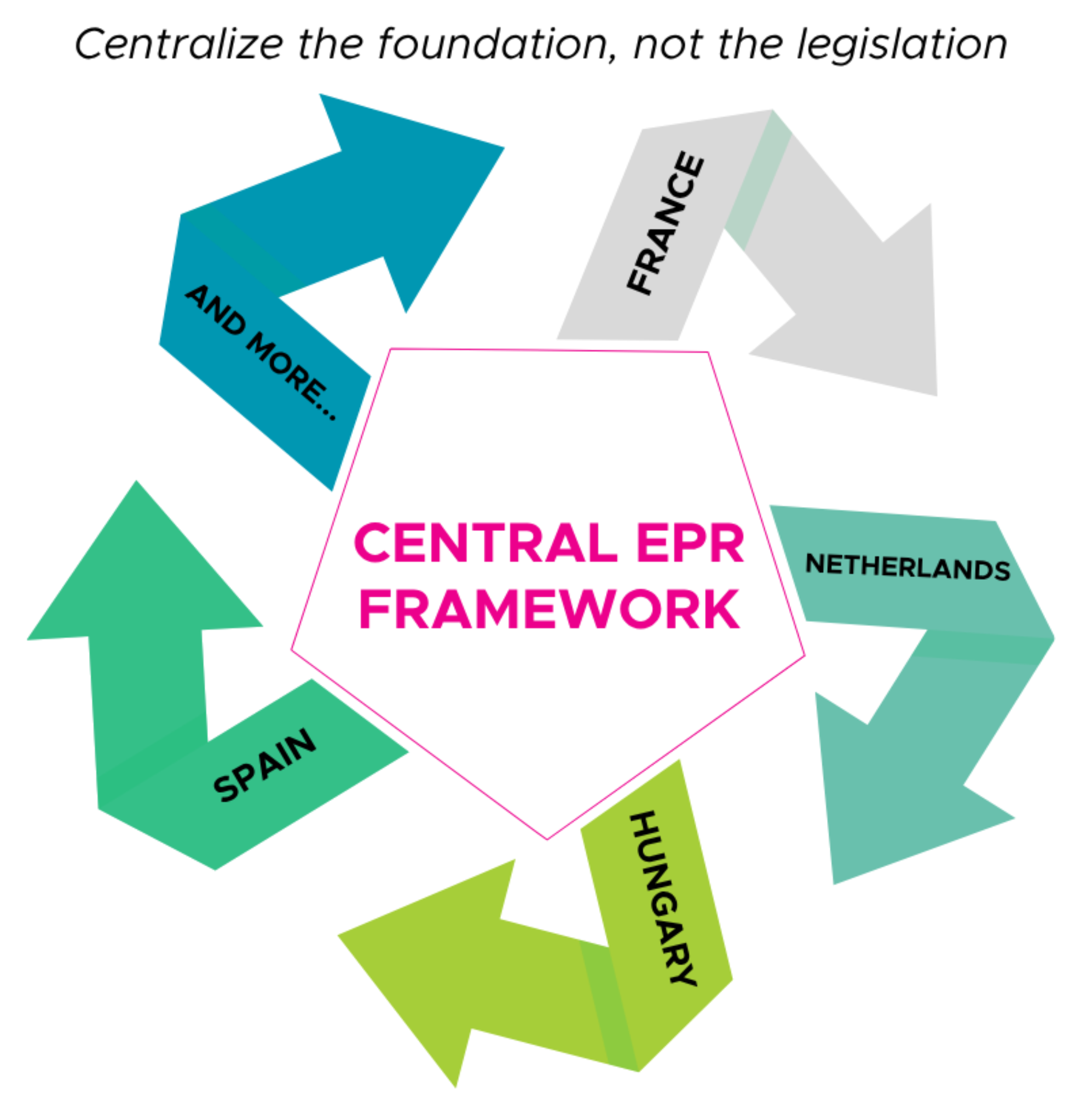
A centralized EPR structure can provide common data definitions, responsibilities, processes and system logic across the organization, while individual country requirements are incorporated where necessary. This creates greater consistency in reporting, legislation tracking, implementation and ERP automation.
A cross-functional project team is important here. Rather than prescribing one fixed structure for every organization, the relevant capabilities should be represented: Compliance or Legal for regulatory interpretation, Product or Procurement for product information, IT for systems and data, Finance for transactional information, and clear project ownership to coordinate implementation.
PRACTICAL LESSON 3
Centralize the foundation, not the legislation.
Build one internal EPR framework that can accommodate different national requirements.
‼️Compliance consequences
Failing to prepare can expose organizations to non-compliance risks and enforcement measures. Depending on the country and applicable legislation, these can include financial penalties, restrictions on placing products on the market and other enforcement actions.
The exact consequences vary between jurisdictions, making it important not only to understand whether an EPR obligation exists, but also to manage compliance in each country where your organization is in scope.
Where to start with Textile EPR implementation
1 Scope → 2 Obligations → 3 Data → 4 Ownership → 5 Process → 6 Monitor
Successful CLF compliance requires moving from a reactive approach to a structured compliance model. A practical starting point is to:
- Determine your scope: identify the relevant products, entities, countries and business flows.
- Understand your obligations: establish your role in the supply chain and the requirements that follow from it.
- Assess your data: determine which information is available and identify gaps before reporting starts.
- Assign ownership: create clear responsibilities across Compliance, Product, Procurement, IT and Finance.
- Build a repeatable process: structure data and systems so reporting does not become a new manual exercise for every country and reporting period.
- Monitor developments: continue tracking national legislation as Textile EPR requirements evolve across Europe.
Taking these steps early gives your organization time to address gaps before they become reporting problems.
What can Pincvision do for you?
We specialize in EPR compliance and support organizations with CLF registrations, reporting and ongoing compliance. We help you determine which obligations apply, translate regulatory requirements into the data needed for compliance, and support registrations, reporting and ongoing compliance execution.
By combining regulatory EPR expertise with structured data management and automated reporting, we help organizations create a scalable approach to textile EPR compliance while internal teams remain focused on their core business.
Textile EPR implementation starts long before the deadline
The key takeaway is simple: do not treat the reporting deadline as the starting point of your Textile EPR implementation.
Getting the fundamentals right not only prepares your organization for CLF EPR reporting, but also creates a stronger foundation for wider Extended Producer Responsibility obligations, from packaging (PPWR) to Clothing, Linen and Footwear (CLF), WEEE and Batteries.
Unsure which textile EPR obligations apply to your organization or where to start? Get in touch. We'll help you understand your obligations and build a solid foundation for accurate and compliant EPR reporting. ⬇️
 5 min
5 min
Roos Mijnen
Environmental Compliance Specialist