+31(0)884321800
 en
 nl


Since late September 2026, organisations with an AEO-C (Authorised Economic Operator for Customs Simplifications) authorisation have been able to apply for a Centralised Clearance authorisation through the EU Trader Portal.
According to the current implementation timeline of Dutch Customs, Centralised Clearance will become available from 2028 for declarations through entry in the declarant's records (EIDR), followed by standard and simplified declarations from 2029.
This is an important development. But I also believe it's a good moment to ask yourself: is your organisation really ready to submit customs declarations centrally?
In conversations about Centralised Clearance, I've noticed that the focus quickly shifts to systems.
How do you configure AEB? How do you connect your ERP system? What data needs to be exchanged?
These are valid questions, but they're not where I would start. Centralised Clearance involves much more than technical implementation. It also changes how you organise and control your customs processes.
First, decide what you want to centralise
In the first two articles in this series, I explored the foundations of Centralised Clearance. We looked at the quality of processes and data, as well as whether your AEO-C arrangements and internal controls still reflect your day-to-day operations.
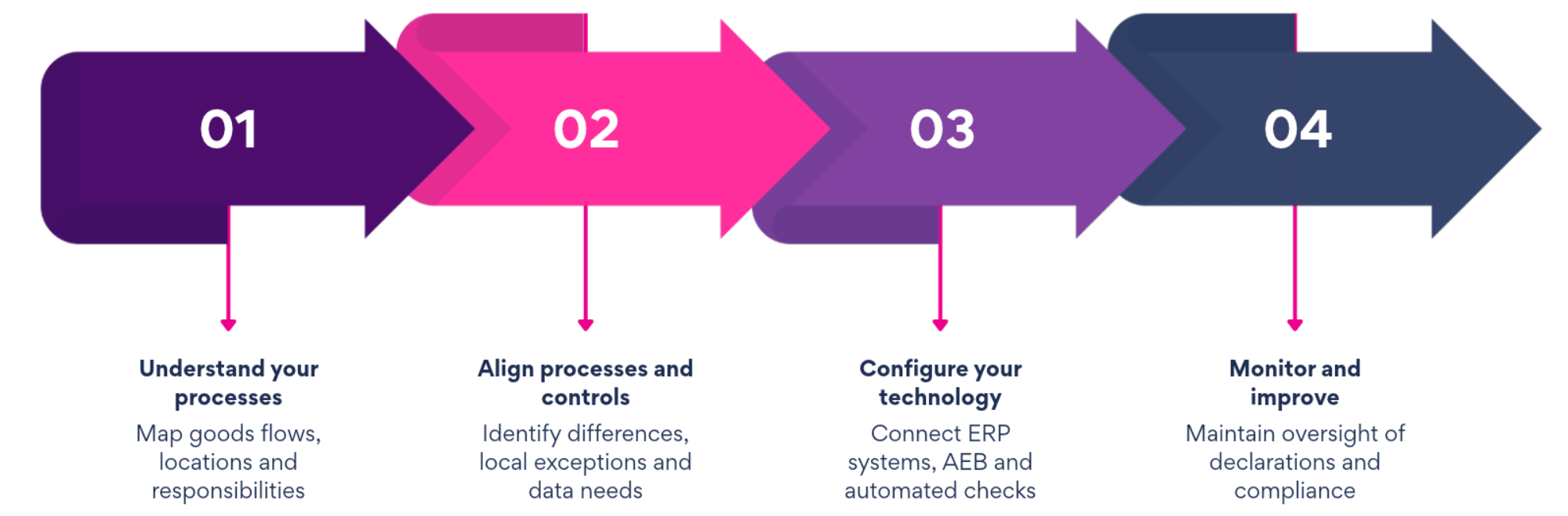
These elements come together during implementation. Before you can centralise your processes, you need a clear understanding of how they work today.
- Which flows of goods pass through which locations?
- How do processes differ between countries?
- Who is responsible for what?
- Which local exceptions will you still need to accommodate?
This may sound obvious, but processes within international organisations are often less consistent than they appear on paper. Differences in working methods, responsibilities and available data sometimes only become visible when you compare processes across locations.
That's why it's important to first determine what you actually want to centralise and what is realistically possible. Only then can you make informed decisions about how to configure your systems.
Technology follows the process
Once you have a clear picture of what your future customs process should look like, you can determine how technology should support it.
- Which data can flow directly from your ERP system to AEB?
- Which checks do you want to automate?
- Where will human judgement still be needed, for example when dealing with unusual goods flows or exceptions?
- How will you set up monitoring to make sure the process continues to work as intended?
You can't answer these questions without also considering responsibilities and internal controls.
Technology can take a lot of work off your hands, but only when the underlying process is properly designed. It's not just about submitting declarations faster. You also want to maintain visibility into the data you use, the checks being performed and the exceptions that require attention.
Not everything needs to work the same way everywhere
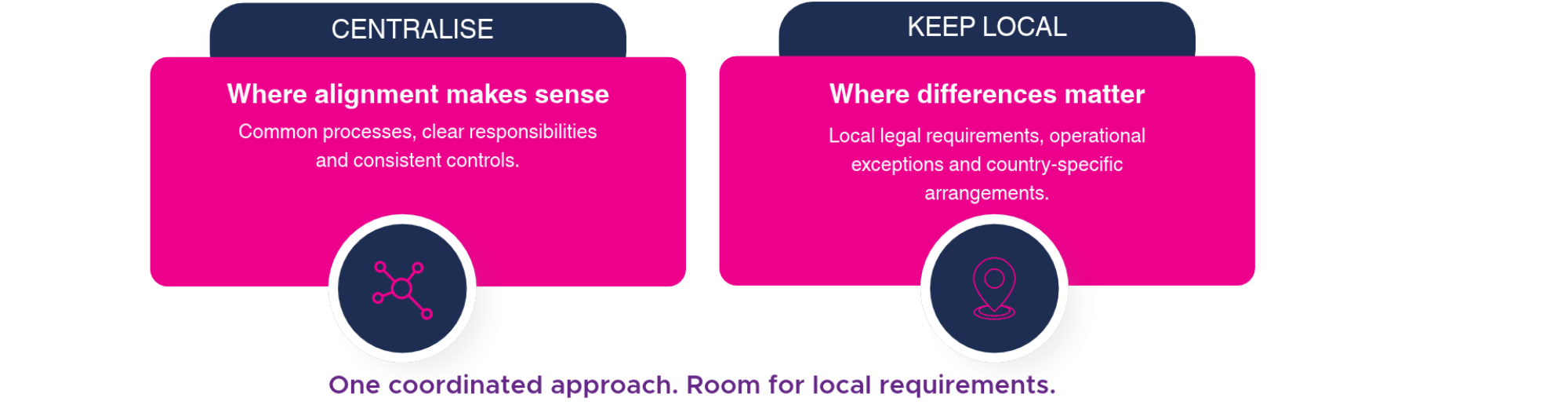
Another important consideration is that Centralised Clearance doesn't mean you have to make all your customs processes identical. Within an international organisation, local goods flows, authorisations and legal requirements may still apply. Certain activities or checks may also need to remain at local level.
So the question isn't how to bring everything into a single system. It's which elements can you harmonise, what should you organise centrally, and where do you deliberately allow for exceptions?
This requires close coordination between the people responsible for customs compliance, operational processes, data and technical implementation. It's precisely this alignment that determines whether Centralised Clearance will work effectively in day-to-day operations.
From preparation to a working customs process
The fact that you can now apply for a Centralised Clearance authorisation doesn't mean every organisation is ready to do so.
Don't have an AEO-C authorisation yet? That's where your preparation starts, as AEO-C is a prerequisite for Centralised Clearance. Already have one? Then it's worth assessing whether your current processes and internal controls are suitable for the way you intend to submit declarations centrally.
Where you start depends on your organisation. Sometimes a feasibility assessment is the first step. In other cases, there may already be a clear ambition to centralise, but processes across different locations still need to be better aligned. Data quality and the configuration of ERP systems and AEB may also require attention.
At Pincvision, we therefore look beyond authorisations and technical possibilities. We also help organisations assess and improve their customs processes, internal controls and the quality of the data needed to support them.
And our support doesn't stop once the process has been implemented. You also need to continue checking whether declarations are accurate and complete, and whether agreed procedures are being followed in practice.
2028 may still seem a long way off. But if you first need to get your AEO-C status, processes, data and systems in order, now is the time to start preparing.
Earlier in this Centralised Clearance series
Throughout this series, I've explored several topics that are important when preparing for Centralised Clearance. Want to learn more about the foundations you need before starting implementation? Take a look at the previous articles.
Part 1: How well do you really know your processes and data?
In the first article, I explore the challenges surrounding processes and data quality. How well do you really understand what's happening within your organisation, and where do differences between locations arise?
Part 2: Is your organization truly in control?
The second article focuses on AEO-C. We look at internal controls and whether your current arrangements still reflect how your organisation operates in practice.
Ultimately, I believe Centralised Clearance is about more than simply being able to submit customs declarations centrally. It's about establishing a customs process that gives your organisation control and helps you maintain it.
And that's exactly what we're here to help you achieve at Pincvision.
 4 min
Samantha Vos
Customs Compliance Specialist